














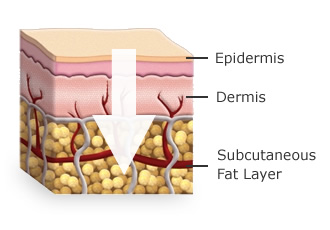
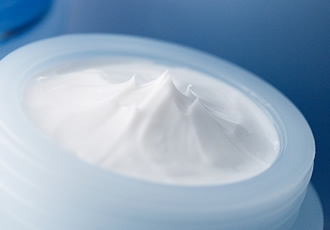
Transdermal progesterone creams have been shown scientifically to be readily absorbed and to produce a reliable and predictable level of progesterone in the body.
When taken in tablet form 90% of natural progesterone is removed by the liver, whereas a well formulated progesterone cream will enable over 90% of its progesterone content to reach the body tissue.
Once it has passed through the skin the progesterone is stored in the fat tissue beneath, which is in fact where the body naturally stores its progesterone reserves.
The Science of Skin Absorption
The skin is the body's largest organ and is far more permeable than most people realise. The outermost layer, the stratum corneum, acts as a selective barrier — blocking some substances while allowing others to pass through. Small, fat-soluble molecules like natural progesterone are ideally suited to transdermal delivery because they can navigate between the cells of this outer layer and enter the deeper layers of the skin.
Once progesterone molecules pass through the epidermis, they enter the dermis — a layer rich in blood capillaries and fat tissue. From here, the hormone is absorbed into the bloodstream and carried to progesterone receptor sites throughout the body, including the brain, uterus, breasts and bones.
This process is remarkably efficient. Research has shown that hormones delivered through the skin can achieve therapeutic blood levels within minutes of application. The fat tissue beneath the skin also acts as a natural reservoir, storing progesterone and releasing it gradually — much as the body's own ovaries would supply it during a normal menstrual cycle.
Why Transdermal Delivery Bypasses the Liver
One of the most significant advantages of transdermal progesterone is that it avoids what pharmacologists call "first-pass metabolism." When any substance is swallowed as a tablet or capsule, it must first pass through the digestive system and then through the liver before it reaches the general circulation. The liver is designed to break down and detoxify foreign substances, and in the case of oral progesterone, this first-pass effect destroys up to 90% of the hormone before it ever reaches the tissues that need it.
This is why women taking oral progesterone often need much higher doses to achieve the same effect — and those higher doses can produce unwanted metabolites and side effects including drowsiness and digestive upset.
When progesterone is applied to the skin, it enters the bloodstream directly through the capillary network in the dermis. The liver is bypassed entirely on the first pass, meaning that the full dose of progesterone is available to the body's tissues. As Dr John Lee, the pioneer of natural progesterone therapy, consistently emphasised, transdermal delivery is the most physiologically appropriate way to supplement progesterone because it mirrors the body's own delivery method.
How the Body Stores Transdermal Progesterone
The body has a natural mechanism for storing progesterone in subcutaneous fat tissue. When progesterone is produced by the ovaries, it circulates in the blood and is taken up by fat cells throughout the body. These fat cells act as a reservoir, releasing progesterone gradually as it is needed.
Transdermal progesterone cream takes advantage of this same mechanism. When applied to the skin, the progesterone first enters the fat layer directly beneath the application site. From there, it is slowly released into the bloodstream, providing a steady and sustained level of the hormone over several hours. This slow-release effect is one of the key benefits of transdermal delivery — it avoids the sharp peaks and troughs that can occur with oral tablets or injections, and instead provides a smooth, consistent supply of progesterone that more closely resembles the body's own natural hormone patterns.
Application Sites and Rotation
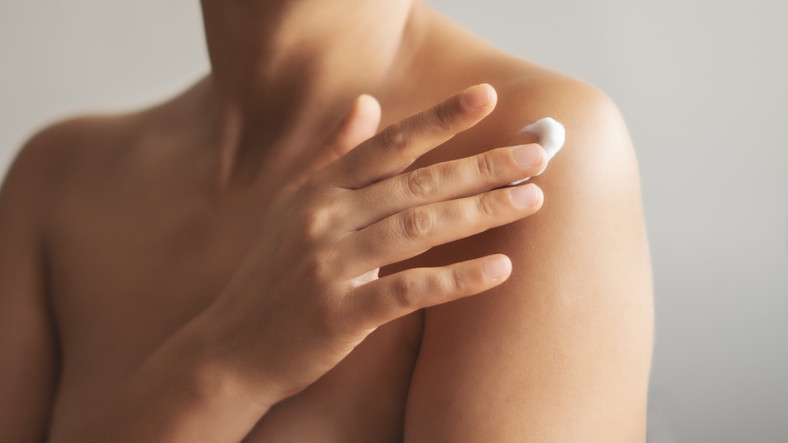
Our usage information is based on the latest findings, which is to incorporate both thin skinned and fatty tissue areas and to rotate the areas regularly - which means daily for most women. This avoids overusing any one receptor site which can lead to less hormone being absorbed.
You get good coverage if you apply to a thin area in one application and a fatty area in the next one. For instance, if you apply it to your left arm on Monday (upper arm is fatty tissue and lower inside arm is thin tissue) and then work down your body on one side and back up the on following days.
Recommended application sites include:
- Thin-skinned areas: inner wrists, inner forearms, behind the ears, temples, neck, and behind the knees — these areas allow rapid absorption directly into the bloodstream
- Fatty tissue areas: inner thighs, upper arms, abdomen, and breasts — these areas allow progesterone to be stored in the fat layer and released gradually
By alternating between thin and fatty areas each day, you benefit from both immediate absorption and sustained release. It is also important to avoid applying cream to the same site on consecutive days, as the receptor sites in that area can become temporarily saturated, reducing absorption efficiency. For detailed guidance, see our cream usage guide.
The Liposomal Advantage
Wellsprings Serenity is a natural progesterone cream that has a special liposomal formula that optimises performance and leads to 97%-100% absorption of its progesterone content.
But what exactly is a liposomal formula? Liposomes are microscopic spheres made from phospholipids — the same type of fat molecules that make up our cell membranes. When progesterone is encapsulated within these tiny spheres, it gains a natural "passport" through the skin barrier. Because the liposome structure is so similar to the body's own cell membranes, it passes through the stratum corneum far more efficiently than progesterone in a standard cream base.
This liposomal technology is the reason that Wellsprings creams can achieve such high absorption rates. Not all progesterone creams are created equal — the delivery system matters enormously. A cream with the right concentration of progesterone but a poor delivery mechanism may only deliver a fraction of its stated content to the body's tissues. The liposomal formula used in Wellsprings Serenity and Wellsprings 20-1 ensures that virtually all of the progesterone reaches where it is needed.
Comparing Delivery Methods: Creams, Oral, Patches and Injections
Women considering bioidentical hormone replacement often wonder how transdermal creams compare with other methods of progesterone delivery. Each method has distinct characteristics:
- Oral progesterone (tablets/capsules): Convenient to take, but subject to first-pass liver metabolism that destroys up to 90% of the hormone. Requires higher doses, which can produce sedative metabolites. Often prescribed as micronised progesterone (Utrogestan) by doctors
- Transdermal patches: Also bypass the liver, but deliver a fixed dose that cannot be easily adjusted. Patches can cause skin irritation, may detach during exercise or bathing, and are often visible on the skin
- Injections: Bypass the liver and deliver a large dose directly into muscle tissue, but require clinical visits and create pronounced peaks and troughs in hormone levels. Not practical for ongoing daily supplementation
- Transdermal creams: Bypass the liver with high bioavailability, allow flexible dose adjustment, can be self-applied at home, and — with a liposomal formula — achieve near-complete absorption. The steady release from fat tissue provides consistent hormone levels throughout the day
As Dr John Lee wrote extensively, transdermal cream is the preferred method for supplementing natural progesterone because it most closely replicates the body's own hormone delivery system. The combination of liver bypass, fat tissue storage, flexible dosing and high absorption makes it the most practical and effective option for most women.
Choosing the Right Progesterone Cream
Not all progesterone creams are the same. When choosing a cream, it is worth considering the following:
- Progesterone source: Look for USP-grade natural progesterone derived from plant sources such as wild yam (diosgenin). This is bioidentical to the progesterone produced by the body
- Delivery formula: A liposomal or micronised cream base will deliver significantly more progesterone through the skin than a standard cream
- Concentration: The cream should contain a meaningful concentration of progesterone — typically around 2% (20mg per ml) for effective supplementation
- Reputation and track record: Wellsprings has been formulating natural progesterone creams for over 25 years, with a track record endorsed by healthcare professionals and recommended by doctors worldwide
To compare Wellsprings bioidentical hormone creams and find the right product for your needs, visit our comparison page. If you are unsure which cream is appropriate for your situation, we always recommend speaking to a healthcare professional who is knowledgeable about bioidentical hormones.
Wellsprings Transdermal Creams
Wellsprings offers a range of transdermal bioidentical hormone creams to suit different needs:
- Wellsprings Serenity — the flagship natural progesterone cream, ideal for women dealing with oestrogen dominance, hot flushes, and other menopause symptoms
- Wellsprings 20-1 — combines natural progesterone with a small amount of natural oestrogen, designed for women who need both hormones
- Wellsprings Lifelong Care — a premium formula with progesterone, oestrogen plus magnesium, zinc and vitamin D for comprehensive support
- Wellsprings Bioidentical Face Serum — a targeted facial serum with bioidentical hormones for skin health
All Wellsprings creams use the same liposomal delivery technology and are manufactured to the highest quality standards. Read our customer reviews to see how other women have benefited.
References
- Lee, J.R. (1996). What Your Doctor May Not Tell You About Menopause. Warner Books.
- Lee, J.R. (1999). What Your Doctor May Not Tell You About Premenopause. Warner Books.
- Rushton, A. & Bond, Dr S. Natural Progesterone. Wellsprings Health.
- Wren, B.G. Transdermal progesterone creams for postmenopausal women: more complications than expected. Medical Journal of Australia.
Medical Disclaimer
This article is for general informational purposes only and is not intended as medical advice. It should not be used to diagnose or treat any health condition. Always consult your doctor or qualified healthcare professional before starting any new treatment or making changes to your existing care. Every woman is unique and individual results may vary.
This article is for general informational purposes only and is not intended as medical advice. It should not be used to diagnose or treat any health condition. Always consult your doctor or qualified healthcare professional before starting any new treatment or making changes to your existing care. Every woman is unique and individual results may vary.


Oestrogen Dominance
Bioidentical Hormone Replacement



Find out what causes this common symptom, and how to get relief

Progesterone supplementation can naturally boost gut health

Hear what doctors have to say about natural progesterone and its benefits

Natural progesterone can be an effective treatment for this serious condition

What happens to hormones at menopause and how can symptoms be treated?

Understand what's behind the increased incidence of oestrogen dominance in the western world
How can a cream deliver progesterone into the body?
What are bioidentical hormones and why are they relevant to your health
Learn how to get the most from your Wellsprings bioidentical hormone creams with proper application techniques, timing, and usage guidelines
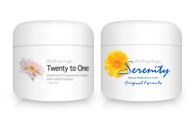
Wellsprings offers two varieties of natural progesterone cream. Read on to find out which is best for you

Oestrogen dominance can interfere with thyroid hormone activity

Despite claims to the contrary, Yam Extract does NOT contain progesterone or raise progesterone levels in the body
All information given on this site is for general interest only. Every woman is unique. Your results may vary.